.png?v=20261123 "Hotion Group")



News
How to Choose Pinch Roller Material, Hardness and Surface Finish
Pinch roller material selection should begin with the material being transported and the conditions at the contact point, not with a preferred covering material or hardness number. A roller that feeds paper reliably may mark a coated film, pick up adhesive from label stock, or lose traction after exposure to a different cleaning agent.
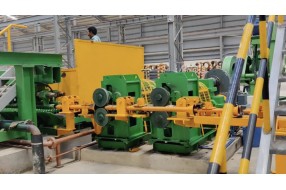 The cover material, hardness, surface finish, cover thickness, and applied load work together. Changing one variable can affect contact area, traction, deformation, heat generation, and the appearance of the processed material. For engineers and procurement teams, the objective is to identify a covering that provides stable feeding without introducing unacceptable wear, contamination, or surface damage.
This guide explains how to compare common covering materials and build a practical selection process for paper, film, labels, textiles, and other industrial web-handling applications. It does not assign a universal hardness or material to each substrate, because the correct choice depends on the complete operating system.
Why Roller Cover Selection Affects Feeding Performance
Grip, Compliance and Contact Stability
A covered roller must develop sufficient traction against the processed material while maintaining a stable contact zone. Its performance depends on more than the nominal friction characteristics of the elastomer. Surface contamination, finish, applied load, speed, and the opposing roller also influence the result.
A more compliant covering can conform to small variations in material thickness or surface condition. However, additional deformation is not always beneficial. Excessive deformation can change the contact geometry and affect feeding accuracy. The required balance depends on the substrate and the mechanical arrangement.
Material Protection and Mark Prevention
Thin films, coated papers, foils, and printed surfaces may show defects even when feeding appears stable. A suitable cover must therefore meet both traction and appearance requirements. Marks may result from concentrated pressure, trapped particles, surface texture, or material transfer.
A non-marking pinch roller should be evaluated against the actual substrate. “Non-marking” does not automatically mean non-stick, scratch-free, or suitable for every coating. Define the unacceptable defect before comparing candidate materials.
Wear, Heat and Chemical Exposure
Wear resistance is only one part of durability. A cover can resist abrasion yet fail because of chemical swelling, cuts, repeated compression, heat exposure, or loss of adhesion to the core. Selection should address the dominant failure mechanism rather than assuming that a tougher or harder material will always last longer.
Comparing Common Pinch Roller Cover Materials
Industrial sourcing commonly separates conventional rubber compounds, polyurethane, and silicone into different covering categories. Technically, silicone is also a rubber, and polyurethane may be an elastomer. The categories below describe practical selection routes rather than mutually exclusive material definitions.
| Covering category | General characteristics | Potential advantages | Factors to evaluate | Typical application conditions |
|---|---|---|---|---|
| Conventional rubber compounds | A broad group of formulations with different mechanical, thermal, and chemical properties | Compliant contact and application-specific combinations of grip, resilience, and environmental resistance | Exact compound, contamination, compression behavior, aging, and compatibility with cleaners and process fluids | Paper, textile, film, and general feeding processes where the compound is matched to the operating environment |
| Polyurethane | A family of elastomer formulations often considered for demanding mechanical contact | Potential abrasion, cut, and tear resistance, with load-supporting characteristics depending on formulation | Heat buildup, water exposure, chemical compatibility, dynamic loading, and surface sensitivity of the substrate | Pulling or feeding duties where mechanical wear and repeated loading are significant selection factors |
| Silicone | An elastomer family frequently considered for thermal stability and release behavior | Potential benefits where heat exposure or reduced adhesion is important | Required traction, abrasion and tear demands, formulation, cleanliness, and possible effects on downstream processing | Selected heated processes or adhesive-contact applications where release requirements must be balanced with grip |
Rubber Compounds for Application-Specific Grip
“Rubber” is not a complete material specification. Different compounds can behave very differently in contact with oils, solvents, water, heat, or coated substrates. A material suitable for a dry paper-feeding line may not be suitable for a process involving oil mist or frequent solvent cleaning.
When evaluating rubber vs polyurethane pinch roller coverings, identify the existing rubber compound if possible. Comparing an unspecified rubber with an unspecified polyurethane provides little basis for a reliable engineering decision.
Polyurethane for Mechanically Demanding Contact
Polyurethane can be a candidate when abrasion, cuts, or load-bearing contact are important. However, polyurethane formulations are not interchangeable. Differences in chemistry and formulation can affect behavior in water, heat, chemicals, and repeated dynamic loading.
Do not assume that replacing an existing rubber cover with polyurethane will solve every wear problem. First establish whether the damage comes from abrasion, sharp edges, contamination, excessive load, or incompatible operating conditions.
Silicone Where Heat or Release Is Important
Silicone pinch roller applications may involve heated processes or contact with materials that tend to adhere to a roller. Its release characteristics can be useful, but a feeding roller still needs adequate traction.
Release and grip are different objectives. A surface that releases an adhesive effectively may not provide the required pulling force under the available load. Candidate compounds should therefore be reviewed for both functions rather than selected on temperature resistance or non-stick behavior alone.
How to Choose Pinch Roller Hardness
What a Durometer Reading Actually Measures
Pinch roller durometer refers to indentation hardness measured using a specified instrument and procedure. It describes resistance to indentation under those test conditions. It does not directly measure friction, abrasion resistance, tensile strength, release performance, or service life.
Record the hardness scale as well as the value. A number without its scale is incomplete, and values on different scales should not be treated as directly interchangeable. For meaningful comparisons, confirm the test method, specimen conditions, and whether the measurement was taken on a test sample or the finished roller.
When a Softer Cover May Be Considered
A softer covering may be considered when conformity and gentle contact are important. It may accommodate small thickness variations and distribute contact differently from a harder cover under comparable conditions.
However, softer is not automatically safer for thin or delicate materials. Excessive deformation can affect feeding accuracy or promote unwanted distortion. Cover thickness, roller diameter, load, and the substrate must be evaluated together.
When a Harder Cover May Be Considered
A harder cover may be considered where limiting deformation or maintaining a firmer contact geometry is important. Whether it improves service performance depends on the compound and application.
Do not equate hardness with wear resistance. Two compounds with the same nominal hardness can differ in resilience, friction, tear behavior, and chemical resistance. Likewise, a harder cover can concentrate contact pressure and mark a sensitive substrate.
Evaluate Hardness with Nip Load and Material Thickness
Pinch roller hardness selection should be linked to the available loading system and the material passing through the nip. Thin film, compressible board, and woven fabric respond differently to the same roller pair.
Also distinguish actuator pressure from actual contact conditions. A pneumatic pressure reading alone does not describe how load is distributed across the roller face. Roller geometry, bearing arrangement, loading mechanism, and cover deformation influence the resulting nip.
Choosing the Right Surface Finish and Roller Profile
Smooth and Ground Surfaces
A smooth or controlled ground finish may be considered where surface appearance and consistent contact are important. However, “smooth” should not remain a subjective instruction when finish is critical.
Specify the required finish using an agreed measurement or approved reference sample. Where roughness values are used, confirm the parameter and measurement procedure. Ra and Rz describe different aspects of a surface and should not be substituted without agreement.
Textured Surfaces
Texture may alter traction, but more roughness does not guarantee better feeding. Performance depends on the substrate, contamination, speed, and contact conditions. A texture that works on one material may imprint, scuff, or collect residue when used with another.
For printed or coated materials, assess the result under the agreed visual inspection conditions. A roller can transport material successfully while producing an unacceptable gloss change or fine surface pattern.
Grooved Surfaces
Grooves may be used to manage air or contact behavior in selected web-handling applications. Their pattern, depth, direction, and spacing influence how the surface interacts with the material.
They are not a general remedy for slipping or contamination. An unsuitable groove pattern can reduce supporting area, create pressure concentrations, or leave marks. Select grooves for a defined function and verify them with the intended material.
Crowned Profiles
A crown is a change in roller diameter across the face, not a surface roughness treatment. Depending on the design, it may be used to address load distribution or web behavior.
Crowning should not be presented as an automatic tracking correction. An inappropriate profile may worsen pressure uniformity or material distortion. Check alignment, deflection, loading, and the intended web path before changing the roller profile.
Material Selection by Processed Substrate
The substrate provides the starting point for selection, but it does not determine the final cover by itself. Use the following table to identify the questions that require further review.
| Processed substrate | Main risks | Roller characteristics to confirm | Useful validation checks |
|---|---|---|---|
| Paper and paperboard | Dust buildup, coating pickup, slip, compression marks | Traction under dusty conditions, conformity, cleanability, and pressure distribution | Check feeding stability and appearance across representative thicknesses and coated surfaces |
| Plastic film and flexible packaging web | Stretching, wrinkles, scratches, gloss changes, unstable grip | Surface texture, cover compliance, contamination sensitivity, and contact uniformity | Evaluate acceleration, normal speed, tension changes, and visible surface defects |
| Labels and adhesive-coated materials | Adhesive transfer, liner damage, residue buildup, inconsistent release | Actual contact side, release behavior, traction, and cleaning compatibility | Test representative adhesive exposure and repeated cleaning cycles |
| Textiles and nonwovens | Fiber buildup, snagging, stretching, compression, uneven grip | Surface profile, conformity, resistance to fiber accumulation, and load distribution | Inspect width stability, surface appearance, and feeding consistency |
| Foil, coated sheet, and sensitive surfaces | Dents, scratches, coating damage, particle imprinting | Cleanliness, surface integrity, controlled compliance, and uniform nip contact | Inspect under agreed lighting and verify performance with representative surface finishes |
Confirm Which Surface Actually Contacts the Roller
A substrate name alone can be misleading. A label web may contact the roller on the printed face, release liner, or an area exposed to adhesive. A packaging film may have different coatings on its two sides.
Provide the contact orientation, coating details, and a representative sample. This can be more useful than specifying only “film roller” or “label roller.”
Operating Conditions That Change the Selection
Temperature and Thermal Cycling
Record the temperature at the contact area, not only the ambient temperature. Include normal operation, startup, brief peaks, and repeated heating and cooling. A candidate should be reviewed against the actual exposure duration and mechanical loading at temperature.
High-temperature steel-strip handling is a separate application. Elastomer-covered web-feeding rollers should not be treated as equivalent to pinch rolls used in hot strip recoiler applications, where metallic working surfaces and different wear-control approaches may be involved.
Chemicals and Cleaning Agents
List the actual process fluids and cleaners, including concentration, temperature, contact time, and frequency. “Solvent-resistant” or “oil-resistant” is not sufficiently specific to establish compatibility.
For uncertain exposure, consider compound-specific compatibility data and representative testing. Review changes in dimensions, hardness, surface condition, and performance after exposure rather than checking appearance alone.
Speed, Load and Duty Cycle
A covering that works during a brief low-speed check may behave differently during continuous production. Repeated deformation and process heat can change the operating conditions.
Include acceleration, deceleration, start-stop frequency, and the highest representative load in the review. Evaluate the mating roller and core support as part of the same system.
Contamination and Cleaning Frequency
Paper dust, fibers, adhesive, oil, and particles can change contact behavior before the cover is mechanically worn out. Select for the expected contamination and a realistic cleaning procedure.
If a proven roller begins slipping, investigate contamination, alignment, pressure, and wear before changing the compound. A material substitution may hide rather than resolve the original problem.
A Practical Roller Cover Selection Flow
Identify the substrate and contact side
Define surface sensitivity and unacceptable defects
Check contact temperature and thermal cycles
Identify process chemicals, cleaners, and contamination
Define traction, release, speed, and loading requirements
Review candidate compound, hardness, thickness, and finish
Verify compatibility and conduct a representative trial
Confirm the specification and acceptance criteria
Define What a Successful Trial Must Demonstrate
A useful trial checks more than whether the web moves. Agree on feeding stability, acceptable appearance, residue transfer, cleanability, and any downstream process requirements.
- Use representative production material, including its normal coating or printed surface.
- Include operating speeds and load conditions relevant to normal production.
- Inspect for slip, wrinkles, surface marks, residue, and dimensional changes.
- Evaluate the intended cleaning method and repeat inspection afterward.
- Record the compound identification, hardness scale, finish, load settings, and trial conditions.
Information to Confirm Before Specifying a Roller Cover
A clear technical brief helps distinguish a cover-material issue from a system issue. When reviewing industrial pinch roller product options, compare the complete roller arrangement rather than matching only diameter and nominal hardness.
- Substrate type, thickness, width, coating, and contact side.
- Representative material sample and acceptable appearance criteria.
- Roller diameter, face length, cover thickness, and core construction.
- Mating roller material, diameter, surface condition, and loading arrangement.
- Line speed, duty cycle, operating load, and tension conditions.
- Contact temperature, peak exposure, and thermal cycling.
- Process fluids, cleaning agents, concentrations, and exposure duration.
- Existing compound and hardness information, if available.
- Current failure symptoms and any recent process changes.
- Required surface finish, profile, and agreed validation method.
The final specification should connect each requirement to an operating need. Avoid copying an old hardness value or selecting a material by its general reputation without confirming why it is suitable for the current process.
Frequently Asked Questions About Pinch Roller Materials
Is polyurethane always more durable than rubber?
No. Polyurethane can be a useful candidate for abrasion, cut resistance, and mechanically demanding contact, but durability depends on formulation and service conditions. A suitable rubber compound may perform better under a particular chemical, thermal, or dynamic exposure. Compare candidate compounds against the actual failure mechanism.
How do I choose pinch roller hardness for thin film?
Begin with film thickness, coating, surface sensitivity, line tension, operating speed, and the available loading arrangement. Evaluate hardness together with cover thickness, surface finish, and the mating roller. Validate the candidate for stable feeding and acceptable appearance rather than choosing a fixed hardness solely because the substrate is thin film.
Can a textured roller surface damage coated material?
Yes. Depending on texture and load, the contact can imprint a pattern, change gloss, scuff a coating, or concentrate pressure. Test the actual coated surface under representative operating conditions. If appearance is critical, define the inspection method and acceptable defect level before approving the finish.
What information is needed to evaluate chemical compatibility?
Provide the exact chemical or cleaner, concentration, temperature, contact duration, exposure frequency, and cleaning procedure. Identify the candidate compound rather than only the broad material family. Where data is incomplete, use representative testing to assess changes in dimensions, hardness, surface condition, and feeding performance.